
Bank Indonesia’s Leadership Transition Puts Institutional Credibility in the Spotlight
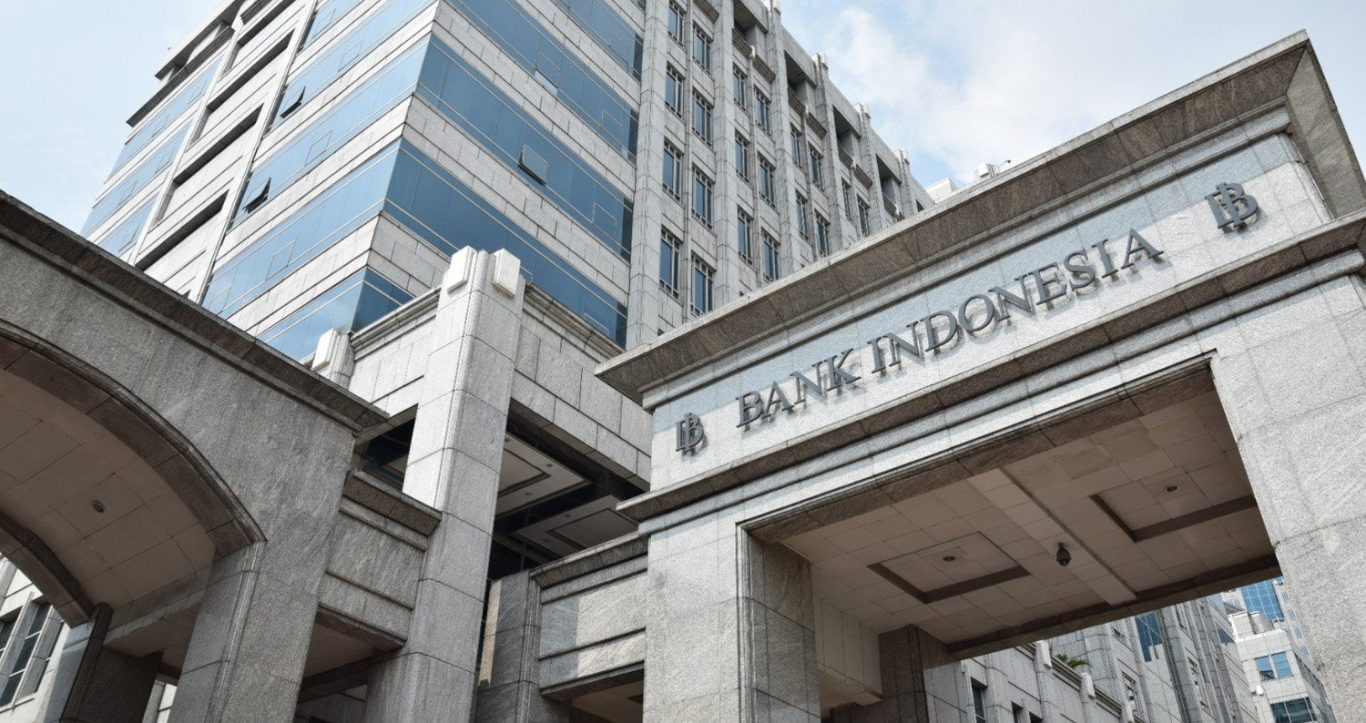
Photo Credit: Niaga.Asia
The unexpected resignation of Bank Indonesia (BI) Governor Perry Warjiyo two years before the end of his term has become one of Indonesia's most significant economic developments of 2026. While the government has stated that the resignation was voluntary and for personal reasons, the timing—following months of pressure on the rupiah, tighter monetary policy, and an expanding government growth agenda—has intensified market scrutiny over the future direction of Indonesia's monetary policy and the independence of its central bank.
Although Senior Deputy Governor Destry Damayanti has assumed the role of acting governor, the episode has shifted investor attention beyond the leadership change itself. The central issue is whether Indonesia can preserve policy credibility and institutional continuity at a time when domestic fiscal ambitions and external economic pressures are testing the country's macroeconomic framework.
Before Perry Warjiyo's resignation, Bank Indonesia had raised its benchmark interest rate by a cumulative 100 basis points to 5.75% since May 2026 to support the rupiah, which had weakened beyond Rp18,000 per US dollar amid volatile energy prices, geopolitical tensions, and sustained capital outflows.
Several reports cited growing differences between Bank Indonesia and the government over liquidity management and monetary strategy. While BI maintained tighter liquidity conditions to stabilize the rupiah, government officials reportedly favored more accommodative liquidity to accelerate President Prabowo Subianto's target of achieving 8% economic growth. Although no official connection has been established between these policy disagreements and Perry's resignation, the reports have reinforced perceptions of increasing tension between monetary and fiscal priorities.
Recent amendments under Law No. 4 of 2026 have renewed attention to the evolving policy framework governing Bank Indonesia, including provisions expanding its role in supporting national economic growth and allowing lawmakers to issue binding recommendations to the central bank. Separately, the government announced that sovereign wealth fund Danantara would participate in discussions within the Financial System Stability Committee (KSSK), prompting debate over the balance between policy coordination and institutional independence.
Against this backdrop of heightened scrutiny over institutional independence, financial markets reacted cautiously to Perry’s resignation. The rupiah weakened immediately after the announcement, while Indonesian equities also declined before partially recovering. International rating agencies—including Moody's, Fitch Ratings, and S&P Global Ratings—emphasized that, although Indonesia's sovereign ratings remain unchanged, future assessments will increasingly depend on the credibility, consistency, and independence of monetary policymaking rather than on the leadership transition alone.
The episode illustrates that institutional credibility is now an integral component of macroeconomic credibility in the eyes of investors.
For domestic markets, the appointment of the next BI governor will likely serve as an important signal regarding policy continuity. Investors are expected to evaluate not only the professional qualifications of the eventual candidate but also the transparency of the selection process and the extent to which the central bank retains operational independence. A smooth, merit-based transition could help reduce uncertainty, stabilize the rupiah, and reinforce confidence in Indonesia's macroeconomic management.
For businesses, continued policy predictability will remain essential. Exchange-rate stability, borrowing costs, and financial market conditions directly influence investment planning, financing decisions, and corporate risk management. Any perception that monetary policy is becoming increasingly influenced by short-term political objectives could raise Indonesia's risk premium and increase financing costs across both public and private sectors.
The developments also carry broader regional significance. Like several emerging Asian economies, Indonesia is balancing competing objectives of supporting economic growth while defending currency stability amid uncertain global financial conditions. Central banks across the region continue to face similar trade-offs as geopolitical tensions, elevated commodity prices, and expectations of tighter global monetary policy sustain pressure on exchange rates and capital flows. Indonesia's handling of this transition will therefore be closely watched by regional investors as an indicator of institutional resilience.
Perry Warjiyo's resignation represents more than a routine leadership change. It has become a test of Indonesia's policy credibility at a time when monetary stability, fiscal ambitions, and institutional governance are increasingly intertwined.
While Acting Governor Destry Damayanti has emphasized policy continuity and financial stability, market attention is now firmly focused on the appointment of a permanent governor. Ultimately, restoring and maintaining investor confidence will depend less on the identity of the successor than on whether Indonesia demonstrates that its monetary institutions remain credible, predictable, and sufficiently independent to navigate an increasingly challenging economic environment.
Sources:
- CNA, “Indonesia faces crucial choice after central bank chief’s surprise resignation,” July 27, 2026. https://www.channelnewsasia.com/asia/indonesia-central-bank-governor-perry-warjiyo-surprise-resignation-6280466
- Jakarta Globe, “Acting BI Governor urges markets not to panic after Perry’s resignation,” July 27, 2026. https://jakartaglobe.id/business/acting-bi-governor-urges-markets-not-to-panic-after-perrys-resignation
- Jakarta Globe, “BI Governor appointment seen as referendum on central bank independence,” July 28, 2026. https://jakartaglobe.id/business/bi-governor-appointment-seen-as-referendum-on-central-bank-independence
- Reuters, “S&P flags Indonesia policy uncertainty after central bank governor quits, affirms ratings,” July 28, 2026. https://www.reuters.com/world/asia-pacific/sp-flags-indonesia-policy-uncertainty-after-central-bank-governor-quits-affirms-2026-07-28/
- South China Morning Post, “Indonesian central banker’s exit signals dilemma over rate policy, growth target,” July 28, 2026. https://www.scmp.com/week-asia/economics/article/3362150/indonesian-central-bankers-exit-signals-dilemma-over-rate-policy-growth-target
- The Jakarta Post, “Policy tensions grew before Perry’s sudden resignation, sources say,” July 28, 2026. https://www.thejakartapost.com/business/2026/07/28/policy-tensions-grew-before-perrys-sudden-resignation-sources-say
- The Jakarta Post, “Rating agencies flag credibility risks over Perry’s resignation,” July 28, 2026. https://www.thejakartapost.com/business/2026/07/28/rating-agencies-flag-credibility-risks-over-perrys-resignation
GOVERNANCE
July 29, 2026