
Beyond the MSCI Prospect:
The Imperative for Market Transparency and Enforcement in Indonesia
On October 15, 2026, MSCI Inc. proposed the reclassification of Indonesia’s capital market from an Emerging to a Standalone Market, setting a final decision date for June 2027. While this timeline establishes a clear window for regulatory intervention and reform, its broader significance extends far beyond a binary classification outcome. It serves as a critical catalyst for evaluating and advancing structural improvements in market transparency and regulatory enforcement, which remain fundamental to the long-term resilience of Indonesia's financial ecosystem.
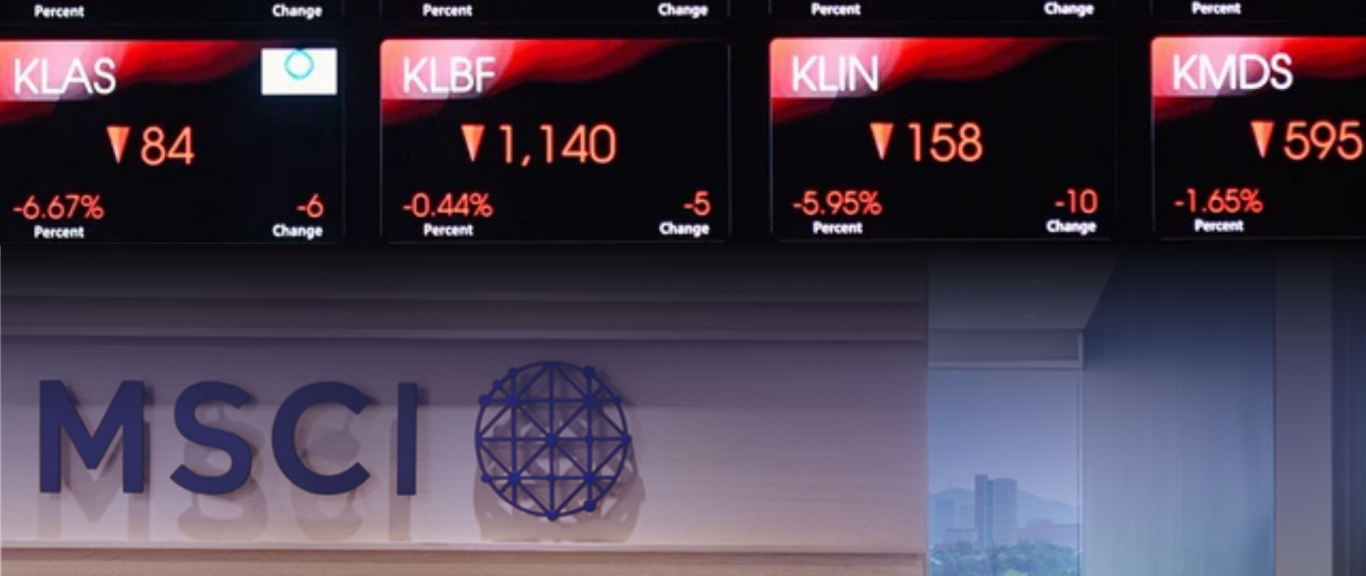
The market's reaction to the proposal underscores the delicate balance between short-term volatility and long-term structural shifts. In the near term, the announcement has introduced pronounced fluctuations across domestic financial markets. Bank Indonesia has noted that the initial foreign capital outflows, which began in the equity space, have subsequently extended into fixed-income instruments, including Government Securities (SBN) and Bank Indonesia Rupiah Securities (SRBI), adding pressure on domestic liquidity and monetary conditions. Should a reclassification materialize in 2027, the implications would transition from immediate volatility to structural repricing. Passive global funds restricted to Emerging Market mandates would likely be forced to divest, potentially putting additional pressure on asset valuations and corporate financing costs.
This macroeconomic sensitivity coincides with regulatory focus on valuation mechanics and disclosure norms in large-scale corporate transactions. The Rp 26.09 trillion acquisition of a 30.25 percent stake in PT Bayan Resources Tbk (BYAN) serves as a recent example. The acquisition involved a negotiated block trade, while separate reports have highlighted share-backed collateral arrangements involving affiliated companies. Under current frameworks, transactions of this nature involving affiliated parties are subject to specific regulatory disclosure requirements regarding valuation and related-party transaction reporting.
The scrutiny from MSCI exists within a broader landscape of global index evaluations. Notably, other major index providers, such as FTSE Russell and S&P Dow Jones Indices, have recently maintained Indonesia’s emerging market classification. FTSE Russell opted not to place Indonesia on its watchlist for a potential downgrade, while S&P indicated that retaining this status remains contingent upon the continued implementation of consistent regulatory reforms and improvements in market accessibility. This divergence in index provider assessments highlights that while immediate downgrades are not universally anticipated, the underlying global demand for structural market improvements remains a consistent benchmark.
To address these structural concerns ahead of the mid-2027 deadline, Indonesian regulators have introduced targeted market reforms, but their effectiveness and consistent enforcement remain under scrutiny. The Financial Services Authority (OJK) and the Indonesia Stock Exchange (IDX) have implemented a series of reforms designed to fortify market integrity, encompassing intensified surveillance of High Shareholding Concentration (HSC) stocks, stricter adherence to minimum free-float mandates, and enhanced beneficial ownership disclosures. In the broader political context, President Prabowo Subianto has publicly stated that Indonesia will not be intimidated by external index providers. Regulatory bodies have subsequently clarified that this stance reflects a commitment to homegrown, long-term market reforms aimed at fostering sustainable investment, rather than a direct challenge to MSCI. MSCI has signaled that its ultimate decision will weigh the tangible, consistent enforcement of these frameworks, particularly regarding the mitigation of irregular trading practices and the enhancement of market accessibility for international participants.
For listed entities, this environment of heightened regulatory and analytical scrutiny translates directly into capital market strategy. With analysts placing increased emphasis on related-party transaction disclosures and free-float compliance, transparent governance could increasingly influence equity valuations. Consequently, corporate financing strategies may need to adapt to potential fluctuations in foreign portfolio flows. Companies may increasingly consider strengthening relationships with domestic institutional investors, such as pension funds and insurance providers, alongside exploring private credit markets to maintain funding stability.
Parallel to corporate adaptations, institutional investors may also reassess their due diligence methodologies to navigate this transitional landscape. Asset managers may place greater emphasis on corporate governance metrics in their valuation models, including free-float percentages, board independence, and historical regulatory compliance. In this environment, equities demonstrating robust, verifiable governance practices could be viewed as lower-risk investments, whereas companies with concentrated ownership or complex structural arrangements may face higher liquidity risk premiums.
As the final decision on MSCI’s proposal approaches in June 2027, the trajectory of Indonesia’s capital market will be defined by the consistent and rigorous application of its regulatory framework. The ultimate measure of success in this process will not be found merely in retaining an Emerging Market classification, but in whether Indonesia can leverage this period to construct a demonstrably more transparent, consistently enforced, and resilient capital market capable of supporting sustainable, long-term economic expansion.
Sources:
- Bisnis.com, “BI Akui Outflow Pasar Saham Akibat MSCI Sudah Merambat ke SBN SRBI,” 24 October 2026. https://finansial.bisnis.com/read/20261024/11/2015364/bi-akui-outflow-pasar-saham-akibat-msci-sudah-merambat-ke-sbn-srbi
- Bloomberg, “MSCI Pressed by Investors to Justify Drastic Indonesia Warning,” 21 October 2026. https://www.bloomberg.com/news/articles/2026-10-21/msci-pressed-by-investors-to-justify-drastic-indonesia-warning
- Bloomberg, “Prabowo Says Indonesia Will Not Be Intimidated by MSCI,” 21 October 2026. https://www.bloomberg.com/news/articles/2026-10-21/prabowo-says-indonesia-will-not-be-intimidated-by-msci
- Bloomberg Technoz, “Manuver Haji Isam Akuisisi BYAN Dianggap Tekan Persepsi Pasar RI,” October 2026. https://www.bloombergtechnoz.com/detail-news/124922/manuver-haji-isam-akuisisi-byan-dianggap-tekan-persepsi-pasar-ri
- CNBC Indonesia, “MSCI & Ketidakrasionalan Status Standalone Market bagi Bursa Saham RI,” 18 October 2026. https://www.cnbcindonesia.com/opini/20261018221323-14-777276/msci-ketidakrasionalan-status-standalone-market-bagi-bursa-saham-ri
- CNBC Indonesia, “S&P Pertahankan Status Bursa RI, Tapi Terancam Turun Kelas Jika...,” 8 July 2026. https://www.cnbcindonesia.com/market/20260708090720-17-749005/sp-pertahankan-status-bursa-ri-tapi-terancam-turun-kelas-jika
- Detik Finance, “Wamenko Perekonomian: MSCI Tidak Selalu Benar!,” 16 October 2026. https://finance.detik.com/bursa-dan-valas/d-8709971/wamenko-perekonomian-msci-tidak-selalu-benar
- Investor.id, “IHSG Digoyang MSCI, Wamenko: Investor Lokal Silakan Serok Saham,” 16 October 2026. https://investor.id/market/458327/ihsg-digoyang-msci-wamenko-dradjad-investor-lokal-silakan-serok-saham
- Kompas, “Bos OJK Sebut Pernyataan Prabowo Bukan untuk Menantang MSCI,” 21 October 2026. https://nasional.kompas.com/read/2026/10/21/20504091/bos-ojk-sebut-pernyataan-prabowo-bukan-untuk-menantang-msci
- Tirto.id, “Airlangga Soal Potensi RI Standalone Market: Biasa, MSCI Ngancam,” 19 October 2026. https://tirto.id/airlangga-soal-potensi-ri-standalone-market-biasa-msci-ngancam-hD2n
ECONOMY
OCTOBER 30, 2026