
Indonesia’s Non-Alignment Dilemma: Between Principle and Practice
Indonesia’s “free and active” foreign policy is entering a more difficult phase as intensifying geopolitical rivalry narrows the space for strategic ambiguity. While Jakarta continues to present itself as a non-aligned power committed to engaging all sides, recent diplomatic and security developments have raised growing questions about whether Indonesia can maintain that position credibly amid mounting pressure from competing major powers.
For decades, Indonesia balanced relations with rival powers while avoiding formal alignment. The 1955 Bandung Conference established Indonesia as a leading advocate of sovereignty, anti-colonialism, and non-alignment, principles that later became central to the country’s “free and active” doctrine. However, today’s geopolitical environment is becoming increasingly polarized. Rivalry between the United States, China, and Russia is forcing middle powers across Southeast Asia to navigate a more demanding strategic landscape where neutrality is judged less by rhetoric and more by practical policy choices.
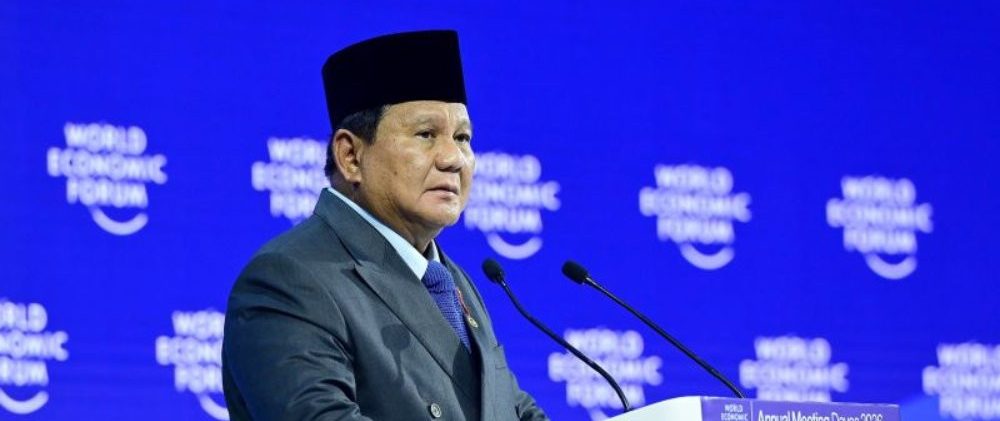
President Prabowo Subianto has repeatedly reaffirmed Indonesia’s commitment to its non-aligned position, emphasizing that Jakarta does not intend to join any geopolitical bloc. Yet Indonesia’s recent engagements increasingly blur the line between pragmatic diplomacy and strategic alignment.
In April, Prabowo met Russian President Vladimir Putin to discuss cooperation in energy, agriculture, pharmaceuticals, and industry. Around the same period, Defense Minister Sjafrie Sjamsoeddin met US Defense Secretary Pete Hegseth in Washington, where both countries agreed to elevate bilateral ties into a Major Defense Cooperation Partnership (MDCP). The agreement is expected to deepen military training, operational coordination, and defense capacity-building.
Jakarta has framed these parallel engagements as evidence of diplomatic openness rather than alignment. However, the deeper Indonesia becomes integrated into competing strategic networks, the harder it becomes to maintain the perception of equal distance from rival powers.
The most controversial issue has been discussions over a notification-based military overflight arrangement proposed by the United States. The proposal would replace Indonesia’s current case-by-case approval mechanism and potentially provide easier military transit access through Indonesian airspace.
The debate is particularly sensitive because it coincides with the implementation of Law No. 21/2025 on National Airspace Management, which reinforces Indonesia’s sovereignty over its airspace. Critics argue that any blanket overflight arrangement risks undermining both the spirit of the law and Indonesia’s broader non-aligned posture.
Indonesia’s response to developments in the Middle East has further complicated perceptions of its strategic position. Jakarta recently rejected participation in a UK- and France-led multinational mission to secure shipping routes in the Strait of Hormuz, citing its commitment to neutrality. However, the government’s muted response to US military actions against Iran drew criticism from analysts who argued that Indonesia appeared reluctant to clearly articulate its position on sovereignty and the use of force.
Concerns are also growing over the coherence and transparency of Indonesia’s foreign policy decision-making. Observers have criticized the government for failing to consistently explain the rationale behind major diplomatic decisions, including Indonesia’s participation in BRICS, involvement in the US-backed Board of Peace for Gaza, and discussions surrounding expanded defense cooperation with Washington.
The issue is compounded by weakening public scrutiny over foreign policy itself. In previous administrations, foreign policy decisions, particularly those involving China, often triggered intense media debate and political contestation. Under President Joko Widodo, issues surrounding Chinese investment and infrastructure projects became major public controversies amplified by opposition groups and media coverage.
Under Prabowo, however, the political environment has become more consolidated. The administration commands a dominant parliamentary coalition and has absorbed many Islamist and opposition groups that previously mobilized criticism over foreign policy issues. As a result, public debate surrounding controversial diplomatic decisions has become noticeably quieter despite rising geopolitical stakes.
This shift matters because Indonesia’s foreign policy credibility has historically depended not only on strategic flexibility, but also on public legitimacy and institutional balance. Reduced scrutiny risks concentrating foreign policy decisions within the executive branch without broader public or political debate, particularly at a time when geopolitical decisions carry growing economic and security consequences.
Indonesia’s evolving posture also carries wider implications for ASEAN. As the bloc’s largest economy and a key advocate of regional neutrality, any perception that Jakarta is drifting toward closer alignment risks complicating ASEAN’s efforts to maintain balance amid intensifying Indo-Pacific competition.
The implications also extend to business and investment. Indonesia’s strategy of maintaining relations with multiple powers may create opportunities in defense cooperation, infrastructure, energy trade, and technology partnerships. At the same time, rising geopolitical exposure could increase regulatory uncertainty and complicate risk assessments for sectors linked to logistics, maritime security, strategic infrastructure, and energy supply chains.
Ultimately, Indonesia’s challenge is no longer simply about maintaining neutrality in principle, but preserving strategic credibility in practice. The flexibility that once defined Indonesia’s “free and active” foreign policy may no longer be sufficient in an era where major powers increasingly expect clearer strategic positioning. Without stronger policy coherence, clearer communication, and more meaningful public scrutiny, Indonesia may find it increasingly difficult to maintain strategic autonomy as geopolitical competition intensifies.
Sources:
- Antara News, “Indonesia says AS, Russia visits reflect free and active policy,” 16 April 2026. https://en.antaranews.com/news/412631/indonesia-says-as-russia-visits-reflect-free-and-active-policy
- Engelsberg Ideas, “Bandung and the birth of non-alignment,” 20 April 2026. https://engelsbergideas.com/essays/bandung-and-the-birth-of-non-alignment/
- Jakarta Globe, “Indonesia Refuses to Send Military to UK-France Hormuz Mission,” 24 April 2026. https://jakartaglobe.id/news/indonesia-refuses-to-send-military-to-ukfrance-hormuz-mission
The Jakarta Post, “Analysis: Overflight dilemma: Between sovereignty and security,” 28 April 2026. https://www.thejakartapost.com/opinion/2026/04/28/analysis-overflight-dilemma-between-sovereignty-and-security.html - The Jakarta Post, “Indonesia still ‘free and active’, Prabowo claims,” 11 March 2026. https://www.thejakartapost.com/world/2026/03/11/indonesia-still-free-and-active-prabowo-claims.html
- The Jakarta Post, “Call grows for clearer foreign policy communication in Indonesia,” 23 April 2026. https://www.thejakartapost.com/world/2026/04/23/call-grows-for-clearer-foreign-policy-communication-in-indonesia.html
- The Diplomat, “Reasserting Public Scrutiny Over Indonesia’s Foreign Policy,” 7 May 2026. https://thediplomat.com/2026/05/reasserting-public-scrutiny-over-indonesias-foreign-policy/
GEOPOLITICS
May 15, 2026
Photo credit: Antara