
Mitigating Climate Shock in Indonesia: Building Resilient Agro-Logistics in the Face of El Niño
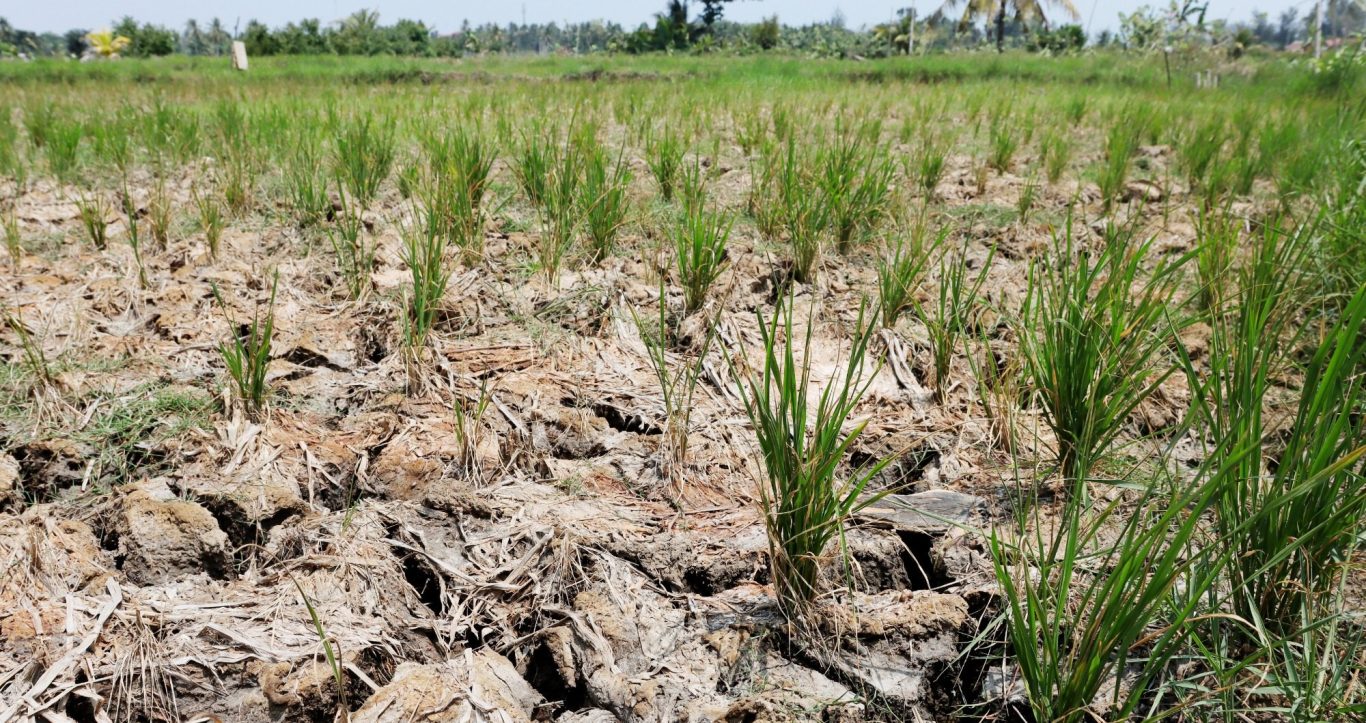
National meteorological agencies in many countries have issued warnings regarding the El Niño situation that is affecting many countries, including Indonesia. El Niño is caused by warmer ocean temperatures in the eastern Pacific that last between nine and 12 months which can disrupt rainfall patterns. As of mid-July 2026, the Indonesian Meteorology, Climatology, and Geophysics Agency (BMKG) reported a 75% probability of El Niño developing, which is also categorized as very strong, with conditions expected to strengthen further. In Indonesia, El Niño is expected to reduce rainfall across much of the country through October 2026, increasing the risks of prolonged drought, heat waves, and land and forest fires.
As of July, the Indonesian government has formulated several plans to anticipate the impact of El Niño, focusing on mitigating the drought risks, as well as preparing measures to prevent land and forest fires, and other potential impacts. According to Coordinating Minister for Infrastructure and Regional Development Agus Harimurti Yudhoyono, the government is coordinating with BMKG to conduct weather modification operations to maintain water availability in reservoirs, including lakes.
The Indonesian government has also implemented other strategies and initiatives, which were launched at the beginning of Prabowo Subianto’s administration. As reported in July, these measures include storing 5.2 million tons of rice, with the standing crop estimated at 10 million to 11 million tons, distributing 100,000 water pumps, and restoring 900,000 hectares of irrigation networks in coordination with the Ministry of Public Works. Further actions encompass cultivating drought-resistant rice seeds, developing over 200,000 hectares of new farmland, constructing reservoirs, shallow wells, and deep wells to secure agricultural water supplies, and optimizing approximately 800,000 hectares of swampland expected to remain productive as water levels recede during the dry season.
However, these programs also carry implementation and fiscal risks. The success of Indonesia’s previous large-scale agricultural projects has been strongly influenced by soil conditions, which can vary significantly across target locations. Achieving optimal crop yields in acidic peat soils and sandy swamplands requires significant soil treatment and agricultural inputs. Furthermore, storing and preserving millions of tons of rice, subsidizing mass pumping equipment, and financing land development would require substantial government resources. Nevertheless, officials maintain that current public finances are sufficient to meet these requirements. “Current government funding remains sufficient,” said Deputy for Food, Natural Resources, and the Environment Leonardo A. A. Teguh. He added that the priority is to ensure that available funding is allocated effectively toward urgent El Niño mitigation measures.
Moving forward, a few key areas present valuable opportunities for deeper focus. Firstly, rather than altering fragile ecosystems such as peat soils, agricultural experts recommend focusing on improving yields on existing farmland. Upgrading existing irrigation networks, distributing drought-resistant seed varieties, and promoting more precise fertilizer application could increase agricultural productivity while reducing pressure to expand cultivation into environmentally sensitive areas.
Secondly, ensuring transparent budget allocation for El Niño response measures while maintaining overall fiscal discipline will be key to success. Although funding availability has been assured, the precise capital allocation is currently being evaluated, according to Coordinating Minister for Economic Affairs Airlangga Hartarto. The strongest commercial opportunities may therefore lie not in expanding Indonesia’s agricultural footprint, but in improving the efficiency of what already exists.
For businesses, aligning the private sector with the government’s initiatives can provide access to large public-sector programs and rapidly expanding agricultural markets. However, companies will need to demonstrate measurable improvements in productivity, water efficiency, storage capacity, or supply-chain reliability rather than relying solely on equipment sales.
El Niño will eventually pass. Indonesia’s structural exposure to climate volatility will not. The government’s response in 2026 should therefore be viewed as more than an emergency intervention. It is an early indication of where future investment in food security is likely to be directed.
For the private sector, the opportunity is increasingly clear: Indonesia needs technologies and infrastructure that can produce more food with less water, preserve more of what it already produces, and reduce the cost of protecting national food supplies. Companies that can solve those problems will find themselves aligned with one of the government’s most durable strategic priorities.
Sources:
- UN World Food Programme (WFP). June 22, 2026. WFP. https://www.wfp.org/stories/what-el-nino-how-does-it-affect-hunger-and-how-does-wfp-respond
- Tempo English. May 19, 2026. Scientists Warn Super El Nino May Bring Extreme Weather in the US. https://en.tempo.co/read/2104394/scientists-warn-super-el-nino-may-bring-extreme-weather-in-the-us
- Channel News Asia. June 24, 2026. High risk of severe haze for rest of 2026 amid El Nino, biofuel demand and Indonesia budget cuts: Report. CNA. https://www.channelnewsasia.com/singapore/severe-haze-risk-southeast-asia-el-nino-indonesia-prabowo-subianto-6203041
- IDN Financials. July 29, 2026. Indonesia prepares measures to tackle drought risks from El Niño. https://www.idnfinancials.com/news/66696/indonesia-prepares-measures-to-tackle-drought-risks-from-el-ni%C3%B1o
- Antara News. July 28, 2026. Indonesia steps up El Nino preparations to protect food supply. https://en.antaranews.com/news/424345/indonesia-steps-up-el-ninopreparations-to-protect-food-supply
- The Gecko Project. Prabowo’s food estate ambitions crash into reality. 2022. https://thegeckoproject.org/id/articles/prabowo-s-food-estate-ambitions-crash-into-reality
- Mongabay. January 3, 2025. Indonesian president says palm oil expansion won’t deforest because ‘oil palms have leaves’. https://news.mongabay.com/2025/01/indonesian-president-says-palm-oil-expansion-wont-deforest-because-oil-palms-have-leaves
- Permana, R. H. 2026, August 11. Efek El Nino, Juli Tahun Ini Suhunya Paling Tinggi Sejak 1991.
- https://news.detik.com/berita/d-8613183/efek-el-nino-juli-tahun-ini-suhunya-paling-tinggi-sejak-1991
- Sekretariat Kabinet RI. 2026. Presiden Prabowo Instruksikan Penanganan Maksimal Karhutla Akibat El Nino, Pemerintah Kerahkan Berbagai Upaya
- https://setkab.go.id/presiden-prabowo-instruksikan-penanganan-maksimal-karhutla-akibat-el-nino-pemerintah-kerahkan-berbagai-upaya/
- Antara News. 2026, August 5. Gov’t confirms funding for El Nino response sufficient. https://en.antaranews.com/news/425612/govt-confirms-funding-for-el-nino-response-sufficient
- CNBC Indonesia. 2026, August 10. Pemerintah Kaji Insentif Dampak El Nino Terhadap Produksi Pangan RI. https://www.cnbcindonesia.com/news/20260810134911-4-757948/pemerintah-kaji-insentif-dampak-el-nino-terhadap-produksi-pangan-ri
CLIMATE
August 11, 2026